
What Good Is Studying?

This picture was taken in the Red Sea, during a holiday in Egypt.

Five years ago, Egypt seemed like a romantic dream, but too dangerous, too poorly understood on my part, for me to even consider going there. The news is often filled with stories of attacks and dangerous happenings going on in the world, and sometimes our critical thinking just doesn’t kick into gear.

Even now, a large part of me feels uncomfortable about going to Egypt, just based on the media here in the UK. This is after having one of the best holidays in my entire life in the country!

It’s important to study, for so many reasons.

Sometimes our thinking gets distorted without us realising it – studying can fix that.

Sometimes there are things we never even dreamed of doing that are right within our reach, things that are the stuff of fantasy and dreams – you can reach them, discover them, by studying.

Because I study geopolitics, I am gaining a better insight into where I can and can’t go. I’ve been scuba diving in Egypt, rock climbing and dune buggying in Jordan, and paragliding in Turkey. I would never have done any of these things if I didn’t take the time and effort to open my mind.
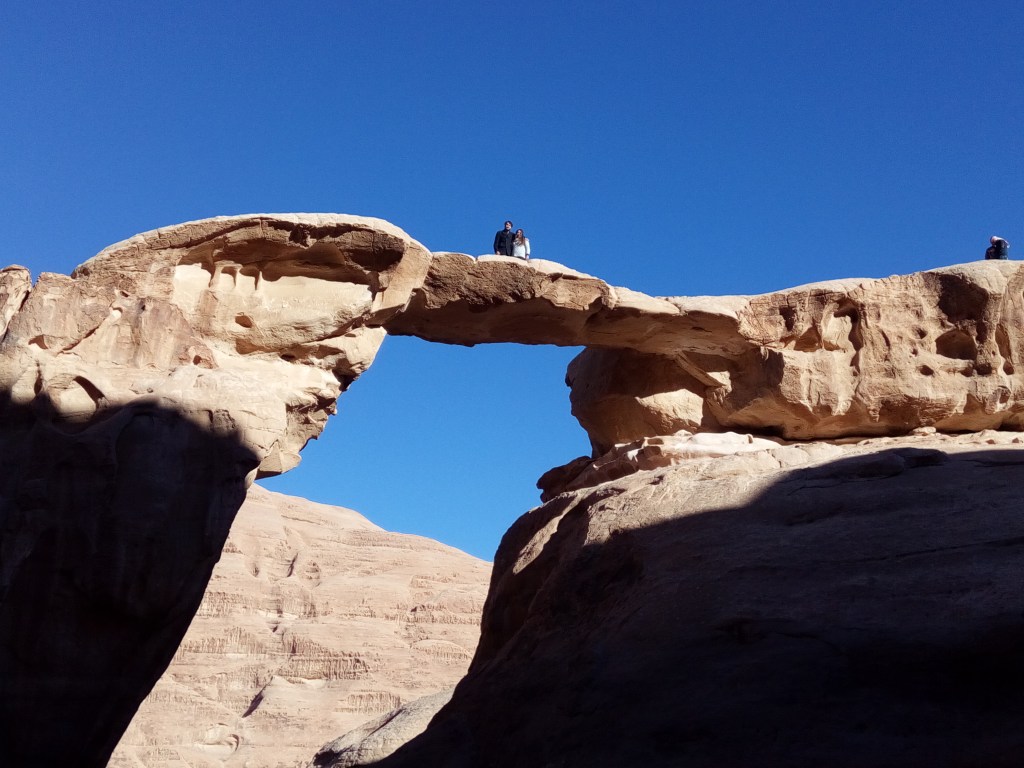
Look how high up we are!

I know I’m nowhere near done studying, and thank God for that!

It means I’m nowhere near done adventuring.

Not yet anyway!

Why I Learned Chinese

When you grow up in a rough neighbourhood, you start fantasising about running away from a very young age.

Luckily, I somehow resisted doing anything stupid, and stuck around in school until I was eighteen, when I left school with 14 GCSEs and 3 A-Levels (the qualifications needed for university). I was all set up ready to go to university, get out of my home town, and make my name. I was desperate to finally get out of there.

So I went to a university on the other side of the country (I lived in the South East of England, went to university in the North West). It wasn’t a highly renowned uni, but they had an amazing Chinese department, and on their open day the Asia Pacific Studies talks sparked a feeling of eager fascination that I haven’t felt in a long time.

I signed up for the course, but after honeymoon period of about six months my brain was completely fried. I was exhausted, frustrated and damn near close to giving up. Writing character after character, again and again…I felt so dead inside.

And I think my teachers caught on.

They asked me, why did you choose Chinese of all languages? Why not French? That would’ve been nice and easy, I’d studied it before at GCSE level and done well, and if I wanted to practise speaking/listening France isn’t far away.

I thought about it. Why was I crazy enough to study Chinese?

And I realised, I bloody love the challenge.

I love the thrill. The feeling of having something damn near unsurmountable to overcome. The feeling of having something meaty to sink my proverbial teeth into.

I wanted to prove myself.

The money, the cultural exchange, the opportunities for travel…those were all amazing potential bonuses that just added to it.

And with that answer, my teachers just smiled, and I returned to my pile of books.

If anyone else is interested in studying Chinese, these are the books that I used in England and in China. Teachers in both countries were swearing by these books during my time at university, and I found them invaluable:

https://amzn.to/2TMDGfl

https://amzn.to/2TxoljF

https://amzn.to/2TNsLlt

https://amzn.to/2TGIa6U

https://amzn.to/2TPyOG6

https://amzn.to/39zE5IE

https://amzn.to/330EZva

https://amzn.to/332xJyM

https://amzn.to/3357TKD

https://amzn.to/2wI6ZHK

https://amzn.to/2v2BE27

It’s a lot of books, but they really do the trick. If you’re really dedicated to learning Mandarin Chinese, I truly recommend you check them out.

Why Today Is Important: 20th March

It’s Iranian New Year folks! Or Persian New Year, or Nowruz, depending on who you ask. Where I am, we talk about the Western New Year, or Chinese New Year, but we rarely talk about others, which is a shame because Nowruz is really intriguing.

Its origins lie in Zoroastrianism, one of the oldest religions known to man, and as a result these New Year celebrations are 3000 years old and wide spread. People in Central Asia, South Asia, Western Asia, the Caucasus, the Black Sea Basin, and the Balkans all celebrate this holiday, though many view it as a secular rather than religious holiday. The joy of this New Year is its flexible nature, as atheists, Muslims and Zoroastrians alike come together to celebrate.

Nowruz marks the equinox, the beginning of spring in the Northern Hemisphere, the first month in the Iranian calendar.

The party is basically two weeks of banging pots and pans in the street, fire displays and fireworks, gorgeous meals of meat and rice and spice, and family coming together to dance and laugh. The literal definition of Nowruz is “new day”, and the way people come together to celebrate really does inspire that same feeling you get when you watch the sunrise after a cold, dark winter. It’s a time for family, for hope, and for change.

For further reading I recommend:

https://edition.cnn.com/2019/03/20/world/what-is-nowruz-trnd/index.html

http://www.iranchamber.com/culture/articles/norooz_iranian_new_year.php

We Can’t Forget Libya

It’s hard to believe that the Libyan Civil War only started back in 2014. It feels a lot longer, and it’s pretty sad to think that it’s never been resolved.

There are a lot of parties involved, and I’m going to cover that here as simply as I can:

The House of Representatives:

  1. Libyan National Army
  2. Libyan Airforce
  3. Libyan Navy
  4. Zintan Brigades
  5. Russian PMCs
  6. JEM (Justice and Equality Movement) – a political group from Sudan
  7. SLM/A (Sudan Liberation Movement/Army)
  8. Sudan RSF (Sudan’s paramilitary force)
  9. Wagner Group (a Russian paramilitary organisation)

Supported by:

  1. Gaddafi loyalists, including the Popular Front for the Liberation of Libya and the Warshefana militias.

The Government of National Accord

  1. Libyan Armed Forces (including Libyan Ground Forces, the Libyan Air Force, and the Libyan Navy)
  2. The Libyan Presidential Guard
  3. The Misrata Brigades (an anti-Gaddafi armed guard)
  4. The Sabratha Revolutionary Brigades
  5. The Petroleum Facilities Guard (an oil company and militia)
  6. Tripoli Protection Force (which was made in 2018 from four different Libyan militias)
  7. The Misratan Third Force
  8. Tuareg militias of Ghat
  9. The Toubou Front for the Salvation of Libya
  10. Chadian Rebels
  11. The Turkish-Backed Free Syrian Army

Supported by:

  1. The EU
  2. The UN

The National Salvation Government

  1. Libyan Shield Force (anti-Gaddafi armed forces)
  2. LROR (Libyan Revolutionaries Operations Room)
  3. Libyan National Guard

Supported by:

  1. Shura Council of Benghazi Revolutionaries
  2. Al-Qaeda in the Islamic Maghreb
  3. Shura Council of Mujahideen in Derna
  4. Benghazi Defense Brigades
  5. Ajdabiya Revolutionaries Shura Council
  6. Derna Protection Force

ISIL

  1. Wilayat Barqa
  2. Wilayat Tarabulus
  3. Wilayat Fezzan

As of the beginning of this year, the warring parties have resumed talks in Geneva, with hopes of reaching a ceasefire. It’s come at a time when armed forces have struck the port in the capital, Tripoli, the first such attack in nearly a year.

Ghassan Salame, the head of the UN’s Libyan mission, has been meeting with both sides separately during these talks, but he has acknowledged his hopes on having joint talks in the near future.

Elbit Systems and Our Security

Have you ever heard of Elbit Systems?

They’re one of the world’s top defensive technology systems, covering products such as surveillance tech, unmanned aircraft, and cyber defences. They primarily sell to the US, Europe and their allies, though in recent years they have increased trade with countries in the Asia Pacific. With the rise in fears over North Korea, Elbit’s airborne laser defence systems have become increasingly popular.

In one of their most recent deals, they’ve provided $70 million worth of defence products to an anonymous Asia Pacific country, with the contract lasting for 25 months.

This agreement raises some eyebrows due to their insistence for anonymity.

But it’s not the first time this has happened.

Last October they provided a $153 million drone deal to an un-named Asian country; it’s becoming a more frequent occurrence, with people growing wary of other nations knowing too much about their defence technology.

Other countries don’t care.

South Korea has felt secure enough to sign up for a $43 million deal for fighter jets with Terrain Following – Terrain Avoidance systems attached to make it easier for low-altitude flights.

Meanwhile, the Italian and Brazilian air forces use Elbit’s Direct Infra-Red Counter Measure Systems (the tech that protects you from heat-seeking missiles), as do Israeli commercial airlines. However, Israel prefers to create their own military defence systems.

So, if you’re rich and want to invest in defensive tech, Elbit is one of the companies you’ll likely buy from.

And if you’re looking for a military career, read up on their website for a better understanding of commonly used military tech.

It’s intense, but interesting technology.

How dangerous is a coronavirus infection?

Christina Macpherson's avatarnuclear-news

Gene Leonard MDCorona 30 Morbitity Mers  18 Mar 20

Do not listen to conspiracy theories or factoids. It is serious. 86 percent of the people, who already heve the virus in the USA, do not know they have it. It can kill babies and toddlers as well. If you value your loved ones hunker down, and help slow down the deadly virus’s transmission.

How dangerous is a coronavirus infection?

Usually coronavirus illnesses are fairly mild, affecting just the upper airway. But the new virus, as well as both SARS and MERS, are different.

Those three types of betacoronaviruses can latch onto proteins studding the outside of lung cells, and penetrate much deeper into the airway than cold-causing coronaviruses, says Anthony Fauci, director of the U.S. National Institute of Allergy and Infectious Diseases in Bethesda, M.D. The 2019 version is “a disease that causes more lung disease than sniffles,” Fauci says.

View original post 144 more words

(China-436) March 8, 2020 – A young man in Hong Kong interested in the history of the Jews in China — Getting 2 Know You – China

CAN THE JEWS OF KAIFENG, CHINA, SURVIVE XI JINPING, AS THEY HAVE 1,400 YEARS OF CLOODS, REVOLUTION, AND INTERMARRIAGE? Dwindling community in city in Henan province is threatened by a campaign against ‘unaurthorised religion’ It has an unlikely ambassador in the form of an 18-year-old schoolboy from Hong Kong Etan Smallman SCMP March 8, 2020 […]

(China-436) March 8, 2020 – A young man in Hong Kong interested in the history of the Jews in China — Getting 2 Know You – China

Why Today Is Important: 17th March

I’m sure most of the Western readers will have at the very least heard of St Patrick’s Day. It’s known for being a night of drunken revelry and mayhem, in the best kind of way. It’s a time when friends and family come together to celebrate the patron saint of Ireland: St Patrick.

And this raucous, crazy day happens to be today. So for all you drinkers, prepare your livers, and all you sober folks, prepare some noise-cancelling headphones. You’re likely to need it in a lot of places tonight.

But, why the hell do we do this? What is it that people are actually celebrating?

Well, it’s St Paddy!

He was born in Roman Britain, around the 4th Century, but at the age of sixteen he was kidnapped and taken to Ireland to be a slave. He escaped, but Ireland had touched his heart, and he returned to convert the Irish to Christianity. He worked hard to build monasteries, churches and schools, and basically became a figure of mysterious and legend. A famous story often told is that he chased the snakes from the land, when masses of them tried to attack him while he was holding a 40-day fast. Ever since, as I have heard many a time from proud Irish speakers, there has been no hint of a snake in Ireland.

The stories say he died on the 17th March, and was buried at Downpatrick, in Northern Ireland. After his death the legends grew and stories spread, and he was eventually accepted as the patron saint of Ireland.

Now, he has come to symbolise everything Irish. He is a figure of the nation, a rallying point for all Irish across the world. Even in the International Space Station there are reports of astronauts celebrating St Patrick’s Day.

And why not? It warms the heart to see people coming together to celebrate their heritage, and they throw one hell of a party for it.

For further reading I recommend:

https://www.britannica.com/topic/Saint-Patricks-Day

http://www.history.com/topics/st-patricks-day

https://www.space.com/11159-irish-astronaut-stpatricks-day-flute-music.html

The Arrow

Israeli security is some of the best in the world.

It’s excellent out of necessity. If Israel slips up, even once, an attack would be inevitable.

The countries of the Middle East have not forgotten, nor forgiven, the land that was taken so forcefully from them in the 60s. And while many would sympathise with these countries, because they have been treated wrongfully, many would also make the argument that what’s done is done, and it’s time to work towards a better future for everyone.

It’s a painful debate to face, and while it’s not one that I enjoy listening to, I know that it’s one that needs to be held through to the end for anything concrete to develop.

However, it’s not my place. I’m British, and I’m staying out.

I will, however, point out some of the insanely well developed technology that Israel now haves because of this need.

And today, my focus is The Arrow missile system.

The Arrow is Israel’s main defence against Iranian missiles, and some officials would argue, Iranian nukes.

With Iran swearing that they will destroy Israel and completely wipe the nation from the face of the earth, Israeli officials and scientists are developing better and better techniques at defending themselves. This includes preventing Iran from getting nukes at all costs.

Israel has been acting rather…difficult, in the eyes of most nations, but it’s completely understandable. Surrounded by a sea of enemies, Israel sees itself as being alone, forced to rely on themselves. If anything bad were to happen, there is no guarantee that the US could save them. They’re trying to maintain good relations with the US, and even Russia, in case such a catastrophe does happen, and has even refrained from using military force in places like Syria and Iraq, but overall Israel knows where they stand.

They know what Iran has in mind.

They’re aware of Iran moving missiles to proxy sites, like Lebanon, Syria, and Iraq in an attempt to work around the missile defence systems, and they’re being forced to counteract this with new defences and new ideas.

For now, The Arrow missile system is Israel’s greatest defence in an increasingly hostile and capable environment.

But for how long will it stay useful?

Design a site like this with WordPress.com
Get started